Part 1 of 2: the story from the field. A year and a half of solar, batteries and an amazing team in the Gambia, and what it showed me about how a small country’s power really works. A Common Ground Projects field note.
TL;DR
- In December 2023 I landed in the Gambia through the Young Expert Programme, and by May 2025 the country had stolen my heart. In between: a year and a half with Greenlink Gambia, designing and installing solar and battery systems for hotels, banks, hospitals and private clients.
- The adventures: a 40 degree first day in Basse, a 20 kWh system driven across two borders to Labé in Guinea, and a hospital director’s thanks for lights during night-time labour.
- The lessons: reliability is something you design and then deliver, robust design is simple design, service is part of the product, and projects fail more often from missing maintenance and follow-up than from missing equipment.
- The people: I learned most of it from the Gambian team I worked with, and investing in people matters as much as the equipment.
- Why it matters: African companies are already building new models, and that is why I care. Part 2 looks at how the Gambia’s power system works and which ideas are worth testing.
When the lights go out
In the Gambia, a power cut is an ordinary event. Reports from September 2026 describe daily cuts of 16 to 18 hours in some areas and outages of up to 48 hours in others (allAfrica). It is also the country that stole my heart. I spent a year and a half of my working life there, and the people I worked with taught me most of what I know about how power is used and looked after. This first part is the story from the field: what we built, what broke, what we learned and why I fell so hard for the place. Part 2 digs into how the Gambia’s power system works and which ideas are worth testing: Reliability from the ground up.
How I ended up in the Gambia
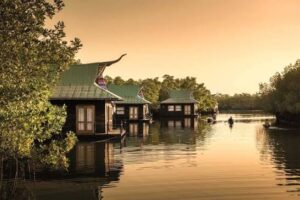
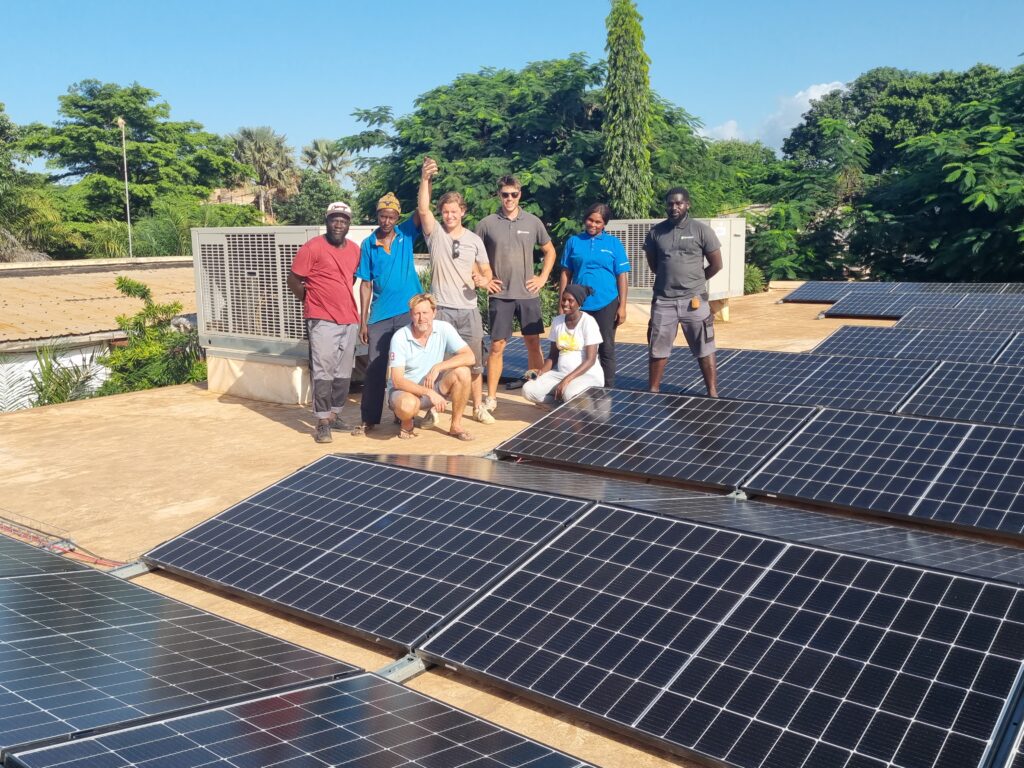
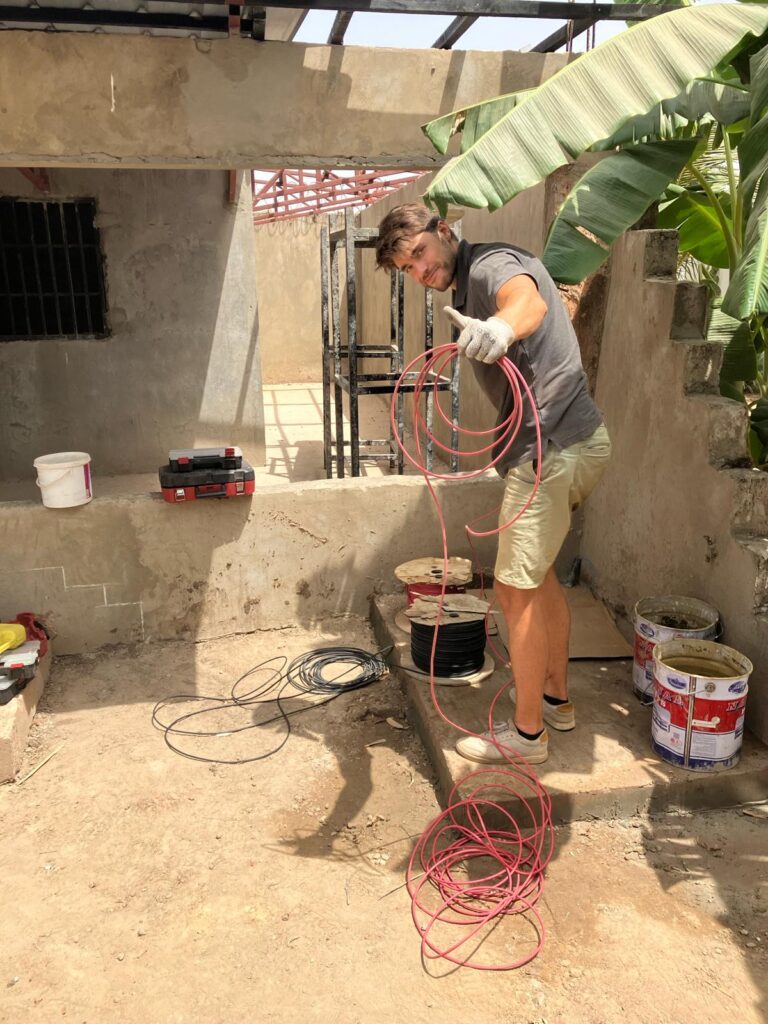
In December 2023 I landed in the Gambia through the Young Expert Programme (YEP), and a year and a half later I left with more stories than I can tell in one post. I worked for Greenlink Gambia, designing and installing solar and battery systems for hotels, banks, hospitals and private individuals. Clients included Reliance, Trust Bank, four of the country’s larger hospitals, Ngala Lodge, the Horse and Donkey Foundation and Makasutu, a beautiful lodge on the River Gambia.
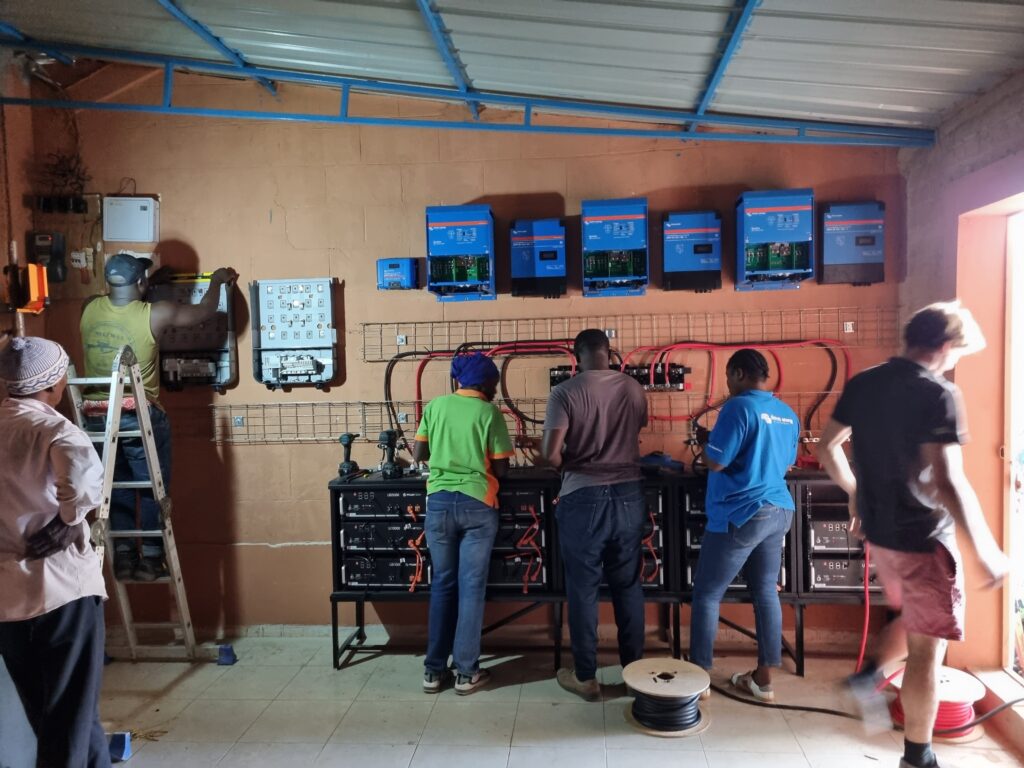
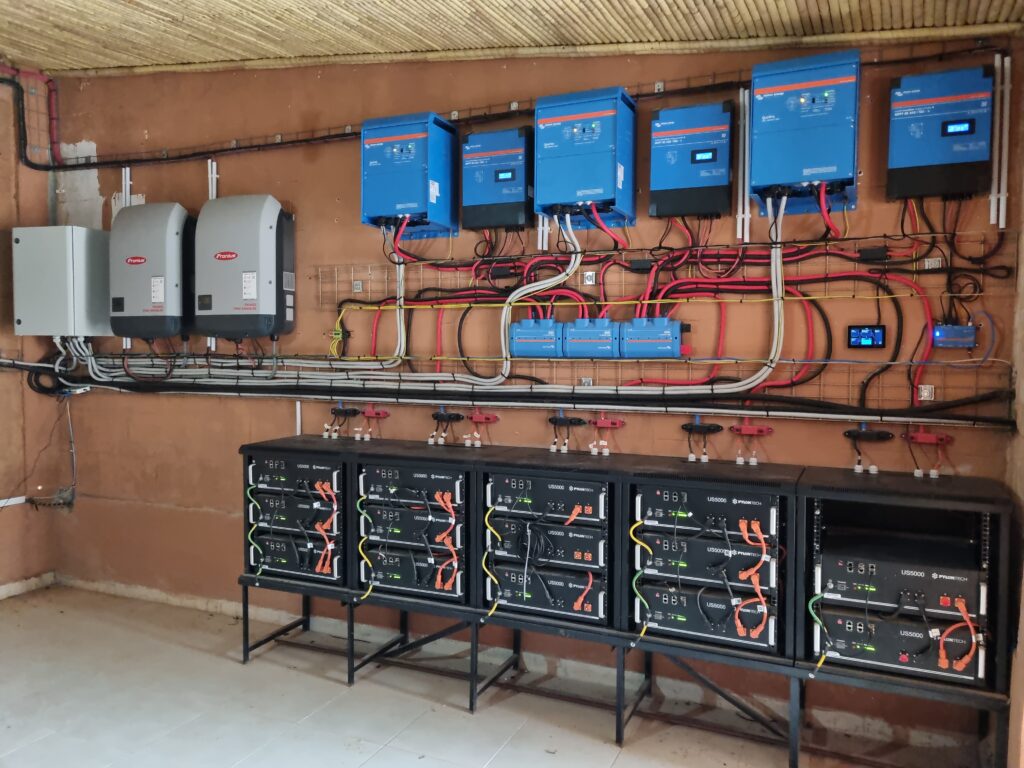
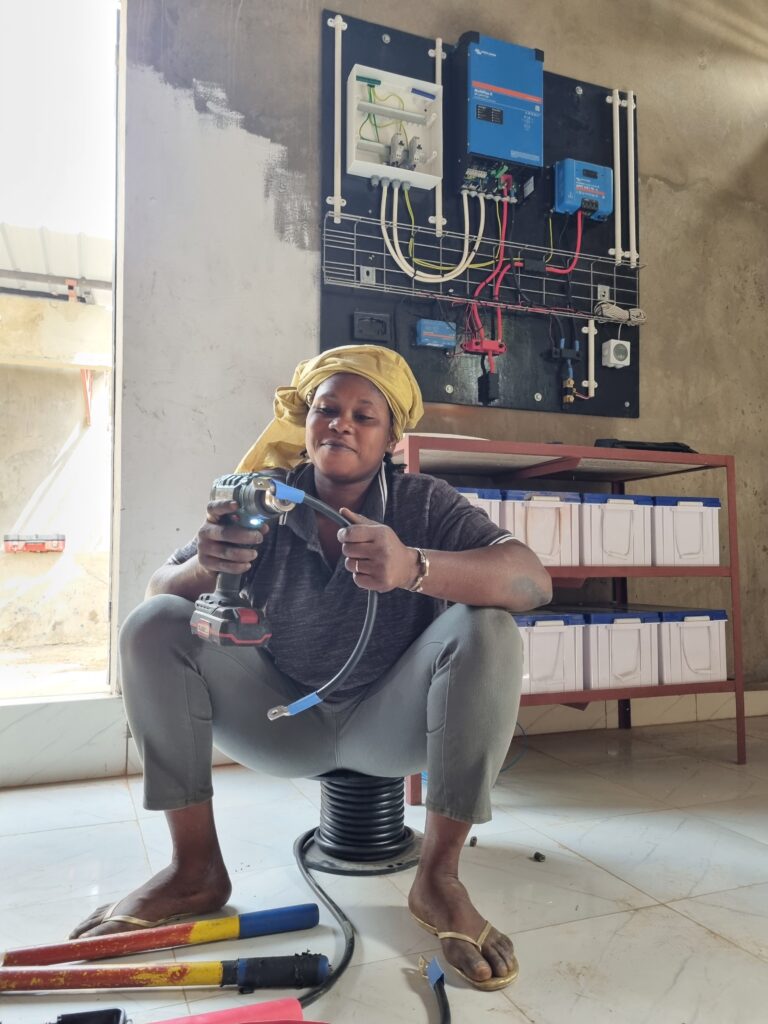
Most systems were built around Victron equipment. For storage I worked with lithium-ion batteries from Pylontech and BYD, and with wet-cell batteries. Our pitch was reliability: we competed with imported Indian and Chinese components that were often much cheaper, and we bet on systems that keep on working.
Day one: 40 degrees in Basse
Day one, and I was thrown in at the deep end: upcountry in Basse, at 40 degrees, installing backup systems across several hospital buildings in full sun. It was almost impossible to think in that heat! It was also the best possible introduction to the conditions that panels and the rest of a system have to survive.
Why Africa, and why West Africa
My fascination with Africa, and West Africa in particular, starts with a contrast. In Europe we are working on the last few percent of comfort. In sub-Saharan Africa 565 million people lived without electricity in 2023, which is 85% of the world’s total, up from 50% in 2010 (World Bank, Tracking SDG 7). There the need is still basic: power for cooking, for children to study after dark, for a clinic to keep medicine cold. In the Gambia about 75% of households still rely on fuelwood or charcoal, and about 25% had access to clean cooking in 2024 (National Energy Compact).
The second reason is the chance to leapfrog, and this is what really excites me. In my view, Europe built systems on top of systems, and they are hard to reimagine. African companies are already building new models, from pay-as-you-go solar to mobile money, and with fewer legacy systems in the way new ideas can be tried faster. Circularity is often a necessity and not a slogan, and a great deal of nature and biodiversity can still be protected. The data points the same way: decentralised renewable systems supplied 55% of new connections in sub-Saharan Africa between 2020 and 2022 (World Bank, Tracking SDG 7).
Third, energy touches everything. It connects to prosperity and livelihoods, to nature conservation through clean cooking, and to safety, health care and education. Getting it right helps societies future-proof themselves and gives people the means to shape their own futures. Better opportunity at home may also change the choices people face about staying or leaving. The relationship between development and migration is complicated and I do not want to overstate it, so I see it as a possible side effect and not the aim.
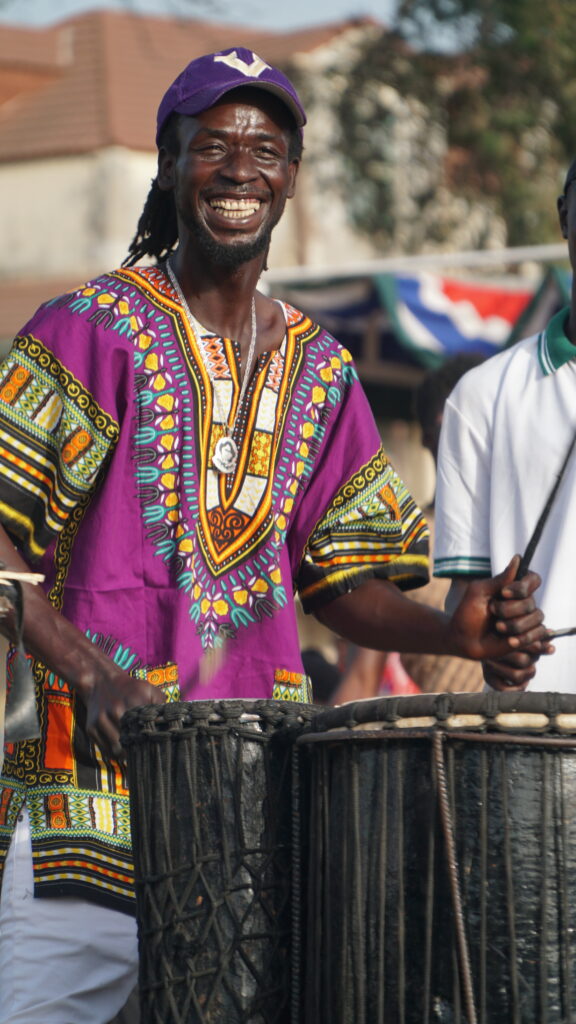
And then there are the people and the culture: the music, and a warmth we were met with almost everywhere. I will say it plainly: the Gambia stole my heart, and I am not ashamed to say it.
Stories from the field
“Yes, they are clean”
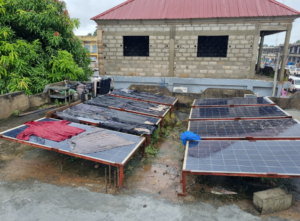
One day a customer called to say their panels were not working. I asked the standard question: were they clean? “Yes,” they said.
When I got there, I found the panels very much in use, just not for power: clothes were spread out to dry on them. A perfect rack, quick and easy! Very convenient, unless you are the one who has to drive out to see it.
It still makes me laugh, and it taught me something. To me the panels were a power plant; to the customer they were also a flat, sunny surface within easy reach. People will use what they own in ways the designer did not plan, and an installer and a customer can look at the same system and see two different things.
The most amazing job: Labé, Guinea
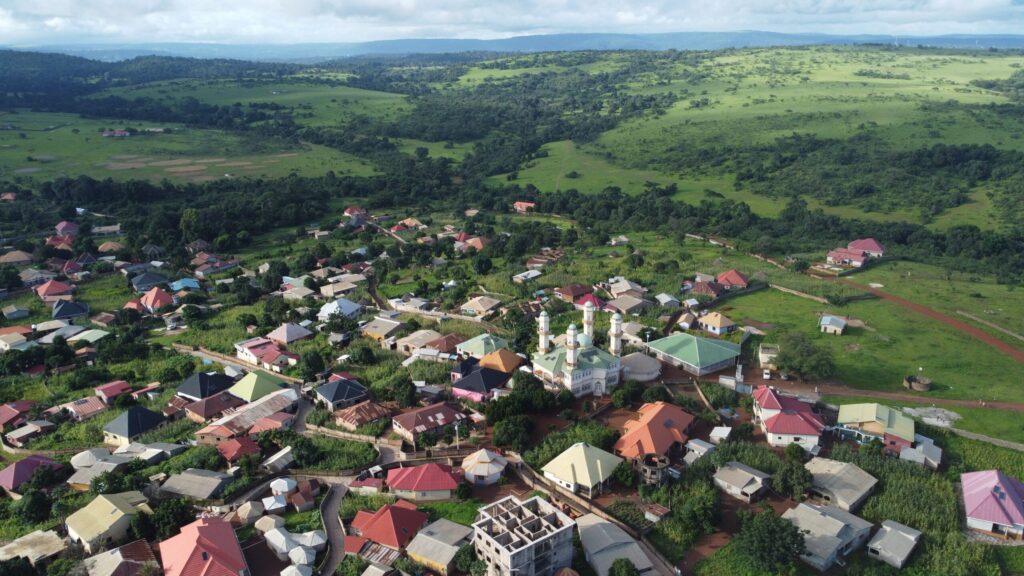
This was the most amazing job of all. It took us across the borders of two countries to Labé, in the highlands of Guinea. A private client had asked for a 20 kWh battery backup system with 18 solar panels of 250 Wp each, about 4.5 kWp in total (my arithmetic). You can size a system like this yourself in the Off-Grid System Sizer. We drove there with all the materials, two welders and our own installation team, and our client helped us get across the borders with everything. The drive and the border crossings are stories in their own right, worth a post of their own. The village was beautiful and we were received with great warmth. Most of it had no power, although it had a lot of fancy big buildings. Watch the video of the trip below.
Greenlink Gambia, where it started. The video is also on our About page.
A tangle of wires
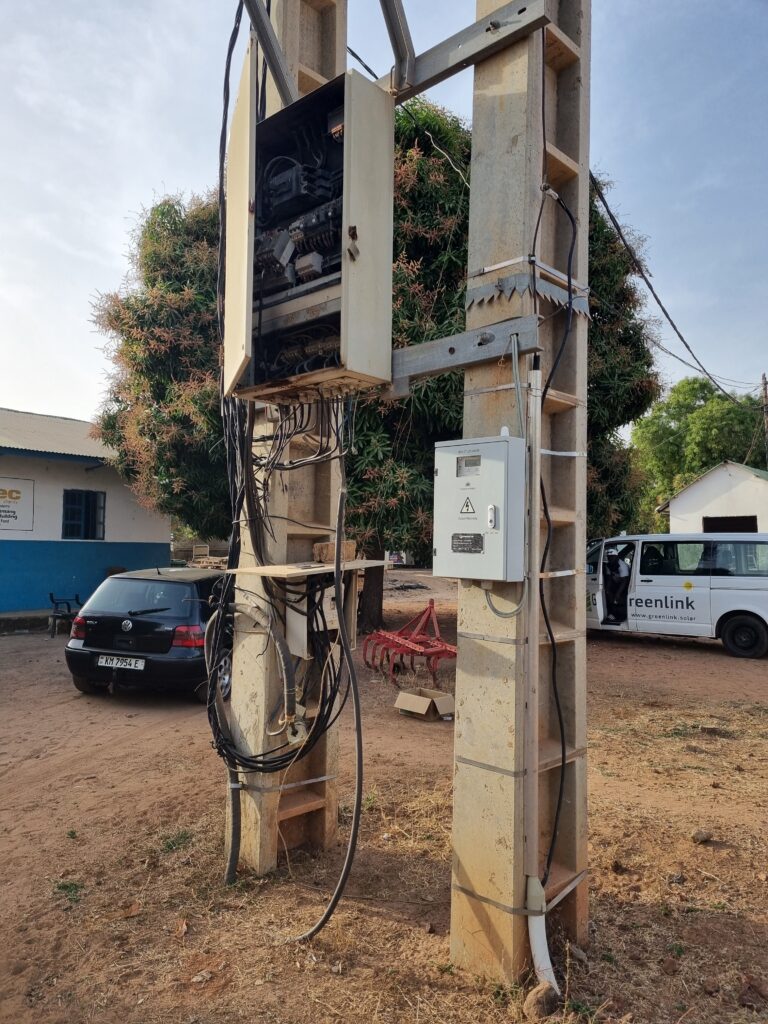
Electrical work can be dangerous, and I met a clear example in the service house of a hospital: a tangle of incoming supply lines, open cabinets and visible copper. It was a combination that could easily be fatal, and the lesson was to stay away from places like that at all costs. Our standard practice was to add extra protection with an earth leakage switch, known in English as a residual-current device, but existing wiring in buildings sometimes caused so many problems that installing to European standards was almost impossible. It is worth remembering how challenging electrical work can be.
The director’s thanks
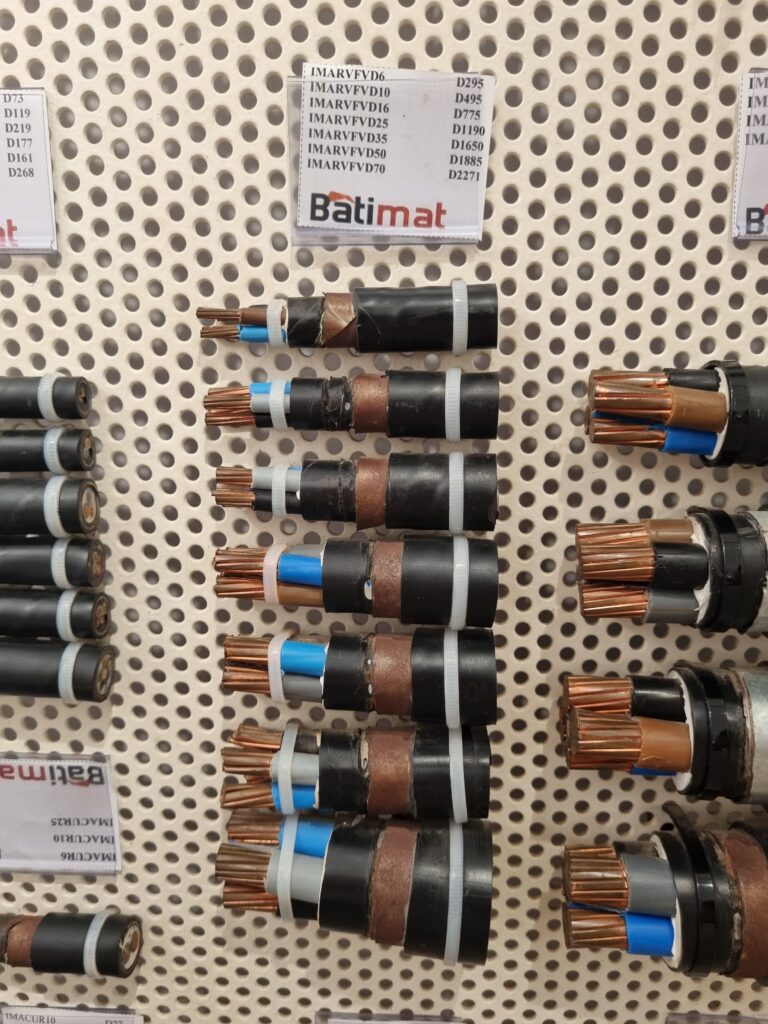
At one of the big hospitals, the director thanked our whole team. He was an inspiring man with big plans. The biggest compliment was that women could finally go through labour at night with the lights on, something that had been unthinkable before. That was the moment the whole job made sense, and moments like it are why I do this work. It is the clearest example I know of what reliable power means: not kilowatt-hours, but a hospital that can do its work when it is needed.
What a year and a half of installations taught me
The work context was nothing short of amazing, and it taught me more than any course could. These are observations from one installer over about a year and a half, not a survey.
Reliability is something you design and then deliver. Customers could buy far cheaper components from India and China. What they bought from us was a system that kept working: equipment we trusted, careful sizing, correct protection and commissioning, and follow-up after the handover. For a hospital or a bank, that is what the money is for.
Cheap first, reliable later. In my experience, many customers chose the cheaper option first. Choosing the cheaper option first is a rational choice when credit is expensive, cash is tight and the future is uncertain: the price today is the number that counts. But after being let down more than once, many customers arrived at the same conclusion: the cheapest system is often not the cheapest once replacements and downtime are counted. A great deal of money and effort is wasted on equipment that gets bought twice, and in my view the fix is mostly structural: affordable finance, real warranties and clear quality standards, so that the long-term option is within reach. I come back to this in Part 2.
The more complex the system, the more sensitive it is. Every extra feature, component or setting is one more thing that can fail or be set wrongly. My rule became to keep a design as simple as the job allows, with clear limits and good protection.
Service is part of the product. In the market we worked in, reliable after-sales service was hard to find, so showing up, diagnosing and fixing was often worth as much as the equipment. Customers noticed, and it built trust faster than any brochure.
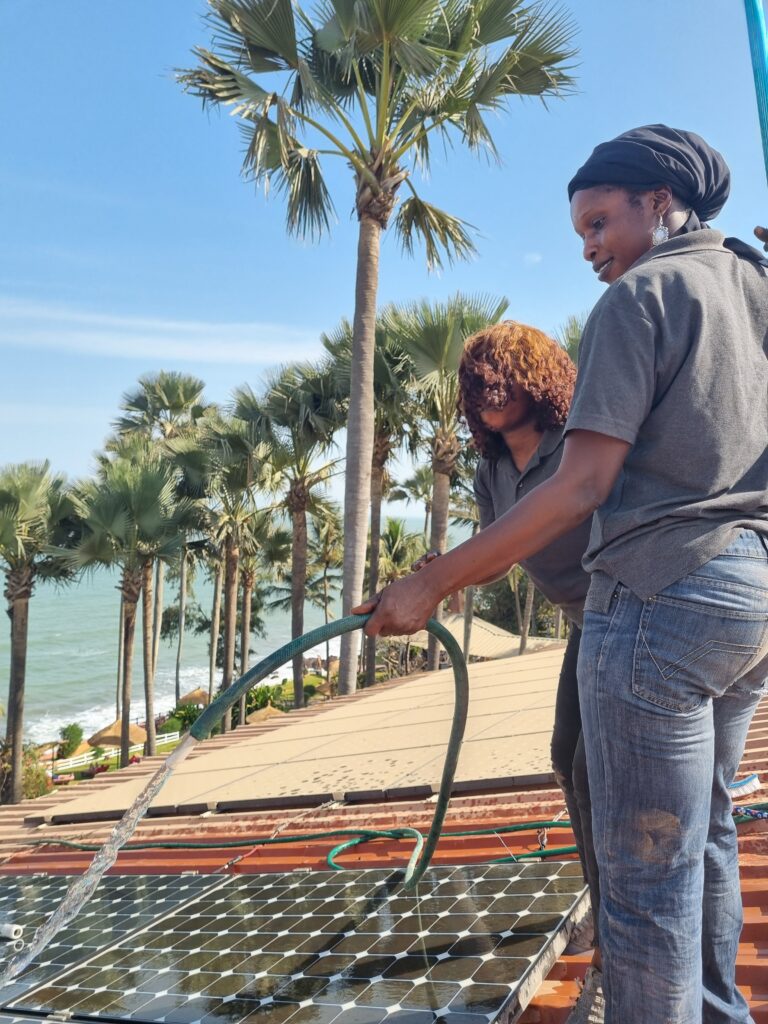
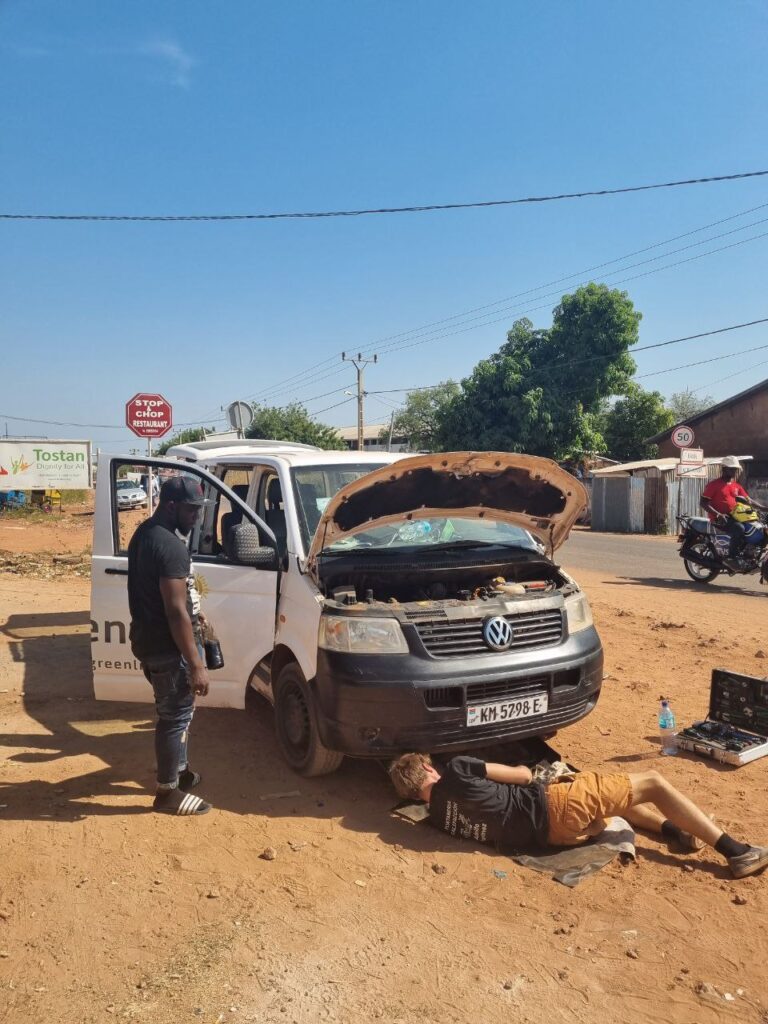
Projects rarely fail because of the equipment. Across the country I saw many projects stall or stop working because of gaps in oversight, maintenance and follow-up. In some cases large international subsidies paid for the installation but not for the years after it. I am not naming any project, because the point is the pattern and not any one party.
The team
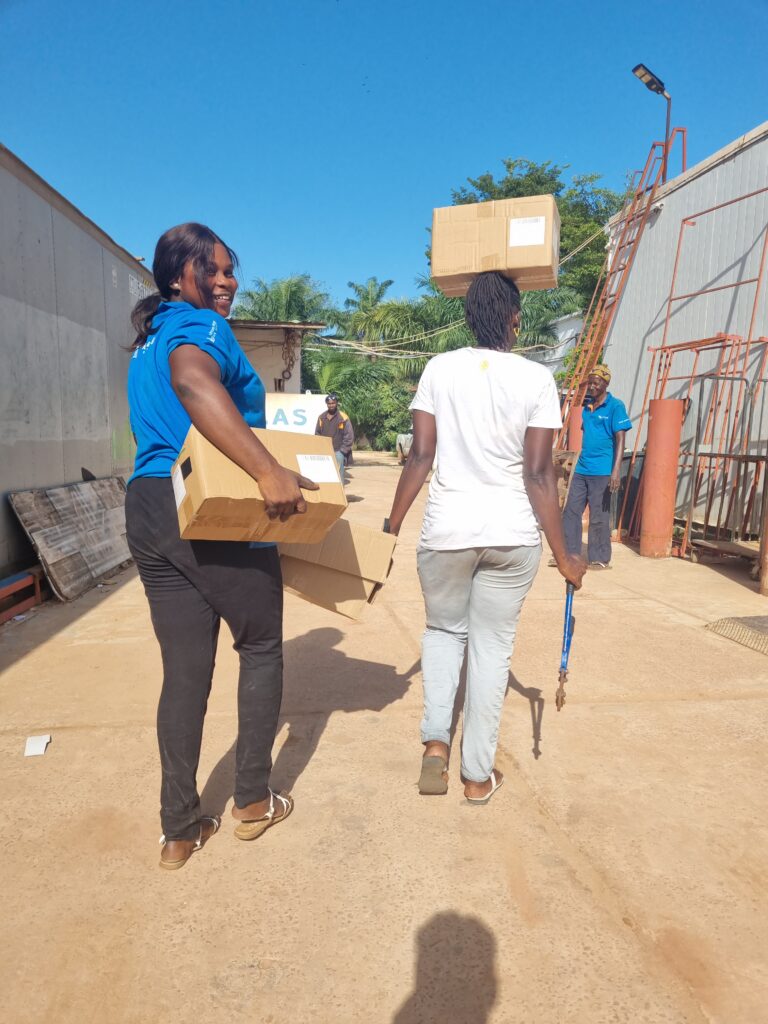
The team is the best part of the whole experience, and the part I am proudest of. The Gambian colleagues I worked with knew the country and the clients far better than I did, and much of what I learned about installing in these conditions I learned from them. Their skills, more than any single component, are what kept our systems running. A business here feeds families, and the people in it know they depend on it. Investing in people takes a lot of time and energy, but people protect what matters to them. That is why I believe training a local workforce, with an employer at the end of it, matters as much as the equipment. It was a joy to work alongside them.
Ready for the technical side? Continue with Part 2: Reliability from the ground up. The projects behind this are on the Projects page.
Sources
- allAfrica, September 2026 power crisis
- World Bank, Tracking SDG 7: The Energy Progress Report 2025
- National Energy Compact for the Gambia (Mission 300)
Guest blogs
Know this from the inside? Write it here.
We publish long, practical pieces from engineers, operators, researchers and community energy entrepreneurs. If you have worked on a mini grid, a battery project, a tariff or a pilot that failed, and you can show your numbers, we would like to read it. Voices from the places we write about are especially welcome.