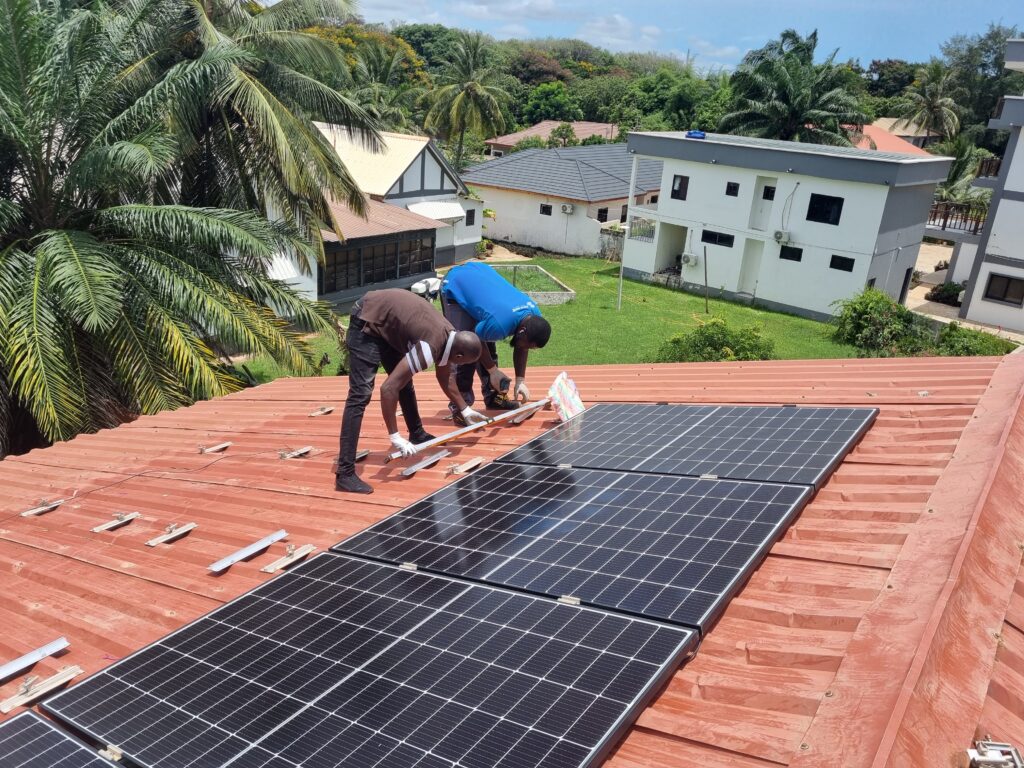
Part 2 of 2: how the Gambia’s power system works today, and some ideas I am excited to test with the people who run it. A Common Ground Projects field note.
TL;DR
- The Gambia’s power problem is a reliability problem. Supply has moved from a floating power plant to regional imports to solar, and each brought a new dependency; cuts of 16 to 18 hours a day were reported in September 2026.
- The price per kilowatt-hour has been steady since 2023 while service has been uneven, and the utility recorded a net loss of $33.6 million in 2024.
- From the field, I would love to test: ownership at the edge, free use with hard limits, small systems and shop battery hubs for the poorest, affordable finance, electric transport as an anchor customer, and regional interconnection as a later step.
- These are angles to test with NAWEC, NGOs and government, not a prescription.
Welcome to Part 2! Part 1: How the Gambia stole my heart tells the personal story behind it; this part gets into the machines and the numbers.
A note on where I stand: this is the installer’s view. I have not worked inside NAWEC, the national utility, or for the NGOs that fund and plan much of the sector, and those organisations know the system far better than I do. What follows are observations, facts and some angles I would like to test with them, not a prescription.
How the grid works
The Gambia is the smallest country on the African mainland: about 11,300 km², 2,422,712 people at the 2024 census, and less than 50 km wide at its widest point (Wikipedia). That size shapes its power system.
Historically the system was thermal: mostly small diesel and heavy fuel oil units of 3 to 10 MW, at Kotu and Brikama, with about half of installed capacity available at any time (Ministry of Finance). Figures for today differ by source. One estimate based on World Bank data puts installed capacity at 158 MW and available capacity at about 102 MW in 2024 (Ecofin); the National Energy Compact lists about 99 MW installed and about 40 MW operational. Peak demand reached 106 MW in September 2024 (Gambia Journal). Network losses averaged 21.5% in 2024, and about 73.7% of the population had access to electricity, with rural access near 45% (National Energy Compact).
Size cuts both ways. The Brikama station has four units of 6.38 MW, 25 MW in total (Wikipedia), which is about a quarter of the 2024 peak (my arithmetic). One plant out of service is therefore felt across the country. But a country this small also has few actors, short distances and the ability to pilot, measure and learn quickly, and that is exciting.
A short history of the machines
A grid is the sum of the machines that were available when it was built. The timeline below uses the sources I could open.
| When | What happened | Source |
|---|---|---|
| 2006 | Brikama Power Station inaugurated: four 6.38 MW diesel units, EUR 15 million | Wikipedia |
| 2014 | Kotu (41 MW) and Brikama site (47 MW, as counted in that study) on heavy fuel oil, plus six light fuel units (13 MW); about 60% of capacity available; production cost about $0.50/kWh against about $0.32 regionally | Energy Reports study |
| 2017 | Supply of about two or three hours a day reported for the Greater Banjul Area | The Standard |
| February 2018 | A seven-year contract with a floating power plant of about 30 MW begins | Ecofin |
| 2019 to 2020 | About 80 MW available against a peak of about 70 MW; supply almost continuous | The Standard |
| March 2024 | Jambur solar plant (23 MWp with 8 MWh of battery) inaugurated | EIB |
| May 2025 | Floating plant contract ends; imports through the OMVG network at about $0.11/kWh replace it; costs reportedly fall by 42% | Ecofin |
| 2026 | Imports from Guinea, which reached 70 to 80 MW in 2025, decline because of lower rainfall; cuts of 16 to 18 hours a day reported in September | Ecofin, allAfrica |
My own time in the country, December 2023 to May 2025, spans the inauguration of the Jambur solar plant in March 2024 and the end of the floating power plant’s contract in May 2025. Whatever the state of the grid at the time, hotels, banks and hospitals wanted a supply they controlled, because for them an outage at the wrong moment costs far more than its length suggests.
Ship, wire, sun
Over the last decade the Gambia has leaned on three different answers to the same question, and each one solved a real problem while creating a new dependency.
| Answer | Size | Cost | What it depends on |
|---|---|---|---|
| The ship (February 2018 to May 2025) | About 30 MW | $0.18 to $0.21/kWh; over $200 million across seven years | A lease, imported fuel |
| The wire (imports through the OMVG network) | 62.1 MW of the 106 MW peak on 22 September 2024 | About $0.11/kWh | Rainfall and hydropower in Guinea, and the availability of neighbouring systems |
| The sun (Jambur solar plant) | 23 MWp with 8 MWh of battery | Part of a $165 million programme | Daylight |
Sources: Ecofin, Gambia Journal, EIB.
The switch from the ship to regional imports reportedly cut costs by 42% and allowed NAWEC to return to profit in 2025 (Ecofin). Imports supplied 57% of generation in the first quarter of 2025, with solar at 6% (National Energy Compact). In 2026 Guinea’s exports fell as hydropower output dropped, which shows the cost of the trade-off: cheaper power, but tied to rainfall in another country.
The solar plant added about a fifth to national supply and serves about 18,500 households. Its battery is sized for grid stability: 8 MWh is about 4.5 minutes of the 2024 peak demand (my arithmetic), so it cannot carry the evening load.
None of these choices was wrong. The pattern is what matters. A small system uses what it can reach at the time, and each source has its own limit: fuel and leases, rainfall, daylight. Resilience comes from having several sources, and from owning some of them close to where the power is used.
What a kilowatt-hour costs, and who pays
NAWEC’s published tariff has two rate sets, 2014 and April 2023. In 2023 domestic rates rose by about 34 to 37%: the first band went from D10.14 to D13.85 per kWh, and the commercial rate from D10.90 to D14.90 (PURA, The Point). When it announced the increase, NAWEC’s managing director cited fuel rising from D40 to D78 a litre (+95%) and the dalasi falling from D45 to D62 per US dollar (+38%) (The Standard). At those exchange rates the domestic first-band price is about $0.225 before and $0.223 after (my arithmetic), so in dollar terms the increase held the price level. In August 2026 NAWEC stated that no tariff change had been made since (Energy Brief).
The average tariff was $0.21/kWh in 2024, and NAWEC recorded a net loss of $33.6 million, 28% of revenue, so costs were not fully covered (National Energy Compact). Supply itself cost between about $0.11/kWh for regional imports and $0.18 to $0.21 for the floating plant.
For communities the effect is uneven. The price per kilowatt-hour has been steady, but the hours of supply have not: about two or three hours a day in 2017, almost continuous by 2019 to 2020, and 16 to 18 hours of cuts reported in September 2026. A household pays the same rate for fewer useful hours and has to cover the gap in other ways. Access is also uneven: about 45% in rural areas against more than 97% in Banjul and Kanifing, with a connection fee of D500 (about $7) in rural areas and D7,500 (about $104) in urban ones. I found no public data on what outages cost households and small businesses, and that gap is itself a finding.
Ownership keeps systems running
One pattern from my time there is that systems last when someone’s income or reputation depends on keeping them running. A system that arrives as a gift can end up with no such person, and then with no one whose job it is to maintain it.
The lesson is not that help is wrong. Help works best when it lowers a local owner’s risk instead of replacing the owner. For NGOs and donors that means funding the conditions for ownership: guarantees and first-loss capital, grants released against verified uptime, maintenance contracts with local firms, spare-parts stock, and technician training that ends in a job.
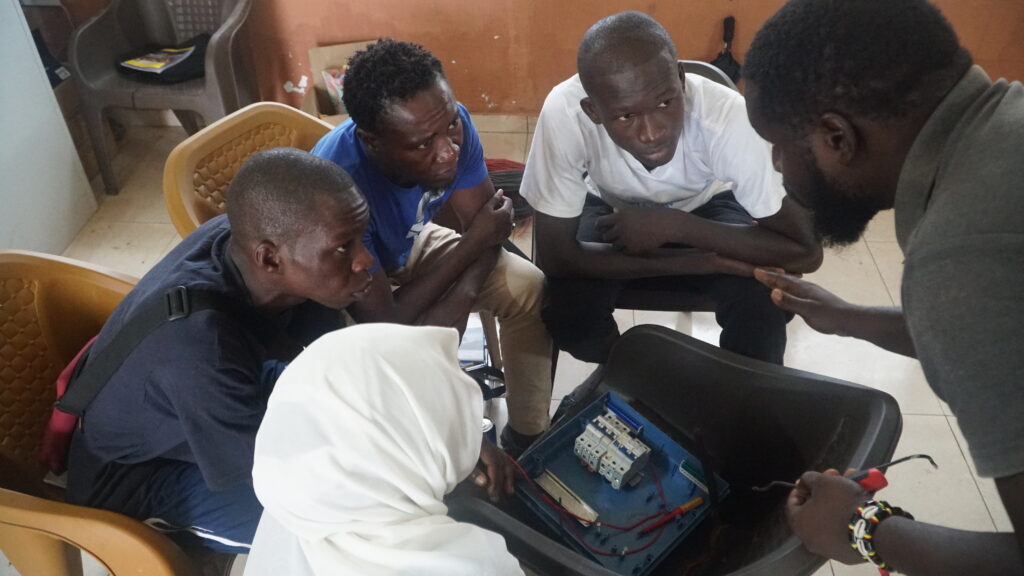
Users should stay free to decide what to do with the power. The limits that protect the system, such as current limits, a battery reserve, protection settings and load priorities, belong in the equipment itself, so that daily use cannot wear them down.
The poorest households need a different entry point. Research on pay-as-you-go solar suggests that half of households without access cannot afford even a basic entry-level system (Energy for Growth Hub). Pay-per-use battery hubs at small shops avoid the loan: the shop owner owns the hub and earns from it, and households pay only for what they use. One company already runs this model in the Gambia and five other countries (Energy Catalyst), although its claims on cost and jobs are its own and not independently checked. To see how a village of small systems could trade power, and what that does to the price, try the Nanogrid Market Lab.
Electric transport: a reason to build local power
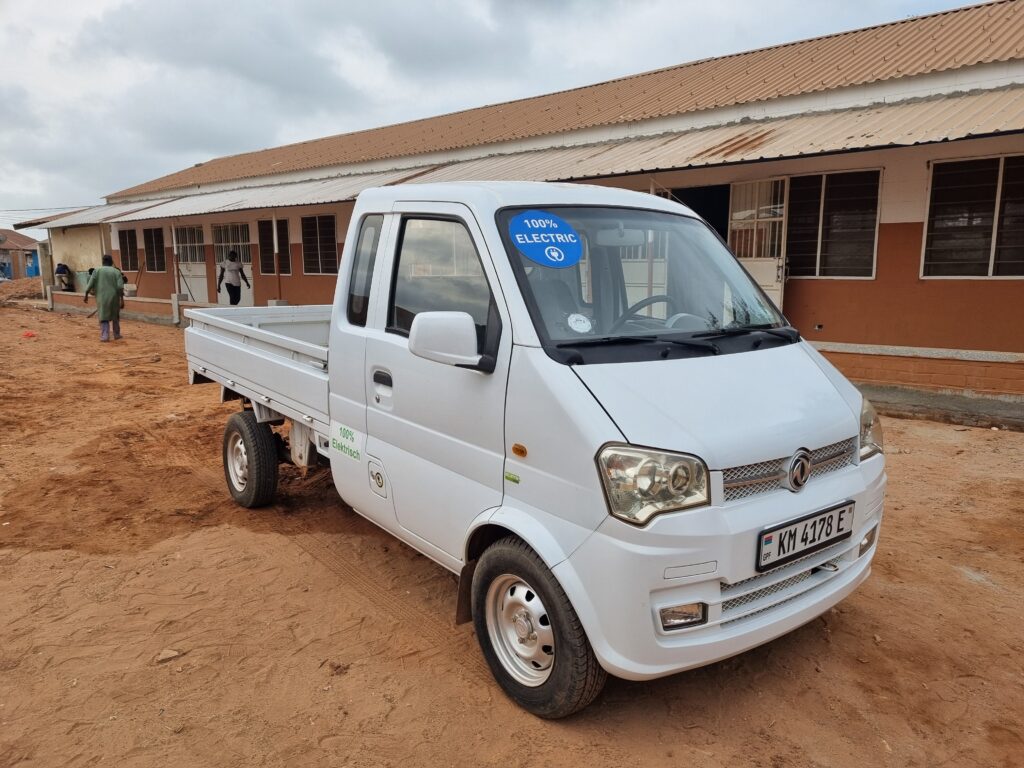
Electric transport is a logical next step, and reliability is what holds it back: a vehicle is only as dependable as the hours of supply behind its charger. An electric tuktuk of the class I have modelled charges at about 2.2 kW and needs roughly nine hours for a full charge. With reported cuts of 16 to 18 hours a day, a charger on the public grid cannot promise those hours.
The link also runs the other way. A fleet that charges every day is a predictable, paying customer, and that is what makes a locally owned solar and battery system bankable: daytime demand that matches solar output, a buyer who saves money by replacing petrol, and a contract that can run for years. The condition is that charging is managed, so that vehicles do not add load at the evening peak.
The economics are not yet proven. In my own modelling of an electric tuktuk business for the Gambia, the vehicle price and the import duty moved the result more than any other assumption. The National Energy Compact does not mention e-mobility, so no plan covers it yet. A first step could be one small pilot: solar, battery, charging depot and vehicles financed and owned together, with uptime, cost per kilometre and repayment published.
Try it yourself: change the vehicle price, import duty and charging assumptions in the E-Tuktuk Profitability Model and see what happens to the business case.
Nine angles for NAWEC, NGOs and government
Here are nine angles from the field, offered as questions to the people who know the system better than I do. I would love to hear where they are wrong.
- Aim at reliability, not only megawatts. Available capacity is estimated at about 102 MW (2024) or about 40 MW operational, against a 106 MW peak. Which availability figure could be published and tracked?
- Add small local reliability next to the large projects. The next large solar phase at Soma is planned for 2027 (National Energy Compact). Which clinics, water pumps and markets could be protected within a year in the meantime? The Off-Grid System Sizer can size a first system for a clinic or a pump.
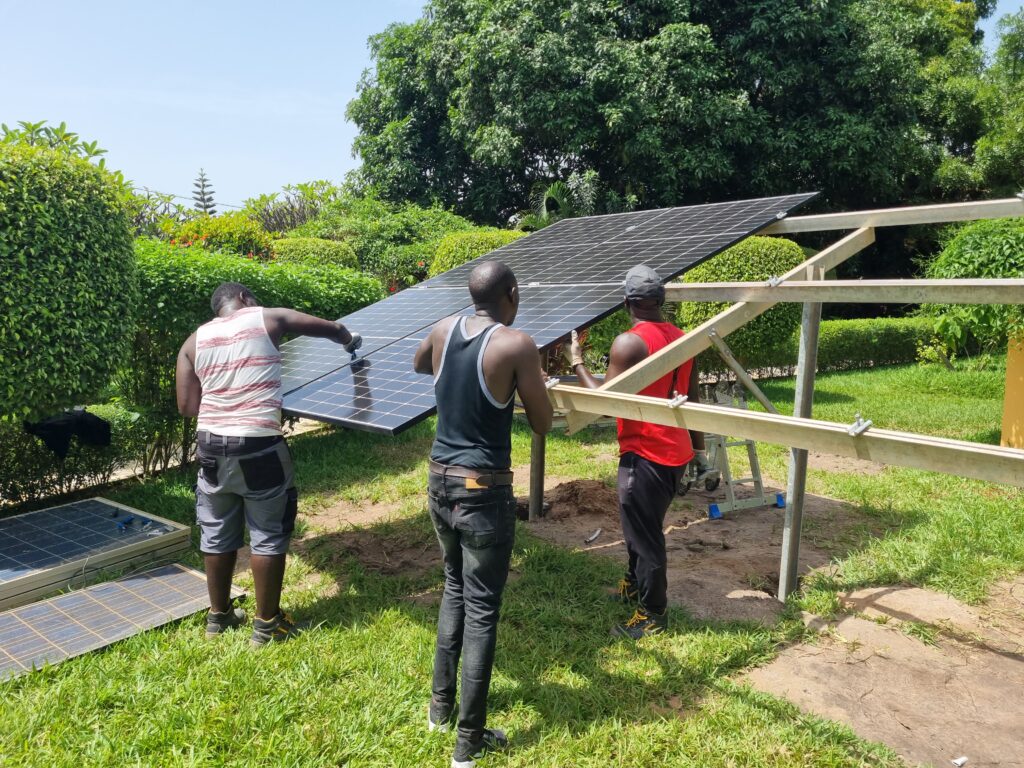
- Build ownership at the edge. Where have owned or co-owned systems outlasted donated ones, and what made the difference?
- Free use, hard limits. Which limits (current, battery reserve, load priority, protection) should every small connected system carry?
- Use electric transport as an anchor customer. Could a fleet depot be the first bankable customer for a local solar and battery system, with charging windows set by the system? The E-Tuktuk Profitability Model is one way to test it.
- Reach the poorest with small steps. Which shops or agents already sell phone charging and could become battery hubs?
- Bring down the cost of finance. The Central Bank policy rate stood at 14% in early 2026, after a 2-point cut, and the dalasi fell 11.5% against the euro in 2025, which makes imported equipment dearer (Central Bank of The Gambia). I could not find a published current microfinance rate. Expensive credit also pushes buyers towards the cheapest option today, which works against long-lasting equipment. Could concessional dalasi loans or guarantees be attached to grants?
- Deepen interconnection, and keep local resilience first. Regional links take years and agreements between several governments and utilities. Local generation and storage strengthen the system whatever regional supply does.
- Measure and share. I found no public data on what outages cost households and small businesses. Which data (uptime by feeder, cost per kWh, outages by community) could be shared so that more people can help?
A small country with room to start from the ground up
The Gambia is small, and that is its superpower. A country of 2.4 million people can pilot a system, measure the results and share them within a year, and the people involved can know one another. Gambian owners, technicians and institutions are best placed to decide how, but I believe a more resilient and efficient system can be built from the ground up: with more local owners, more sources close to where the power is used, and finance that suits small businesses. I am biased, of course: the Gambia stole my heart.
I would love corrections and additions from NAWEC, NGOs and local companies. If you work on any of these questions, let’s compare notes!
The personal story behind this is in Part 1: How the Gambia stole my heart. The projects behind this are on the Projects page, and the models above live on the Tools page.
Sources
- allAfrica, September 2026 power crisis
- Ecofin, 74 MW of new capacity
- Ecofin, 16 months after the floating plant’s exit
- The Gambia Journal, Karpowership, NAWEC and the cost of keeping the lights on
- The Standard, The Cost of Darkness
- The Standard, NAWEC unveils new water and electricity prices
- The Point, tariff increase from 10 April 2023
- PURA, electricity tariff schedule
- Energy Brief, NAWEC on tariff claims, August 2026
- National Energy Compact for the Gambia (Mission 300)
- European Investment Bank, Jambur solar plant
- Ministry of Finance, power generation
- Energy Reports study on the Gambia’s electricity supply (abstract)
- Central Bank of The Gambia, Monetary Policy Report, February 2026
- Energy for Growth Hub, Off-grid solar’s poverty premium
- Energy Catalyst, MOPO hubs
- Wikipedia, The Gambia and Brikama Power Station
Figures marked “my arithmetic” are my own calculations from these sources. Where sources disagree, the text says so.
Guest blogs
Know this from the inside? Write it here.
We publish long, practical pieces from engineers, operators, researchers and community energy entrepreneurs. If you have worked on a mini grid, a battery project, a tariff or a pilot that failed, and you can show your numbers, we would like to read it. Voices from the places we write about are especially welcome.